1 · Meithari
The foundation. Body-conditioning postures (vadivu) named after animals - horse, lion, elephant, serpent - along with kicks, jumps, twists, and fluid sequences. Every student begins here.
A discipline that shapes the body, sharpens the mind, and carries you across every stage of life.
Kalari is not a sport you take up for a season. It is a discipline that shapes the body, sharpens the mind, and carries you across every stage of life. Our training reflects that - from a child's first stance to an advanced practitioner's refinement, every age finds its place in the kalari.
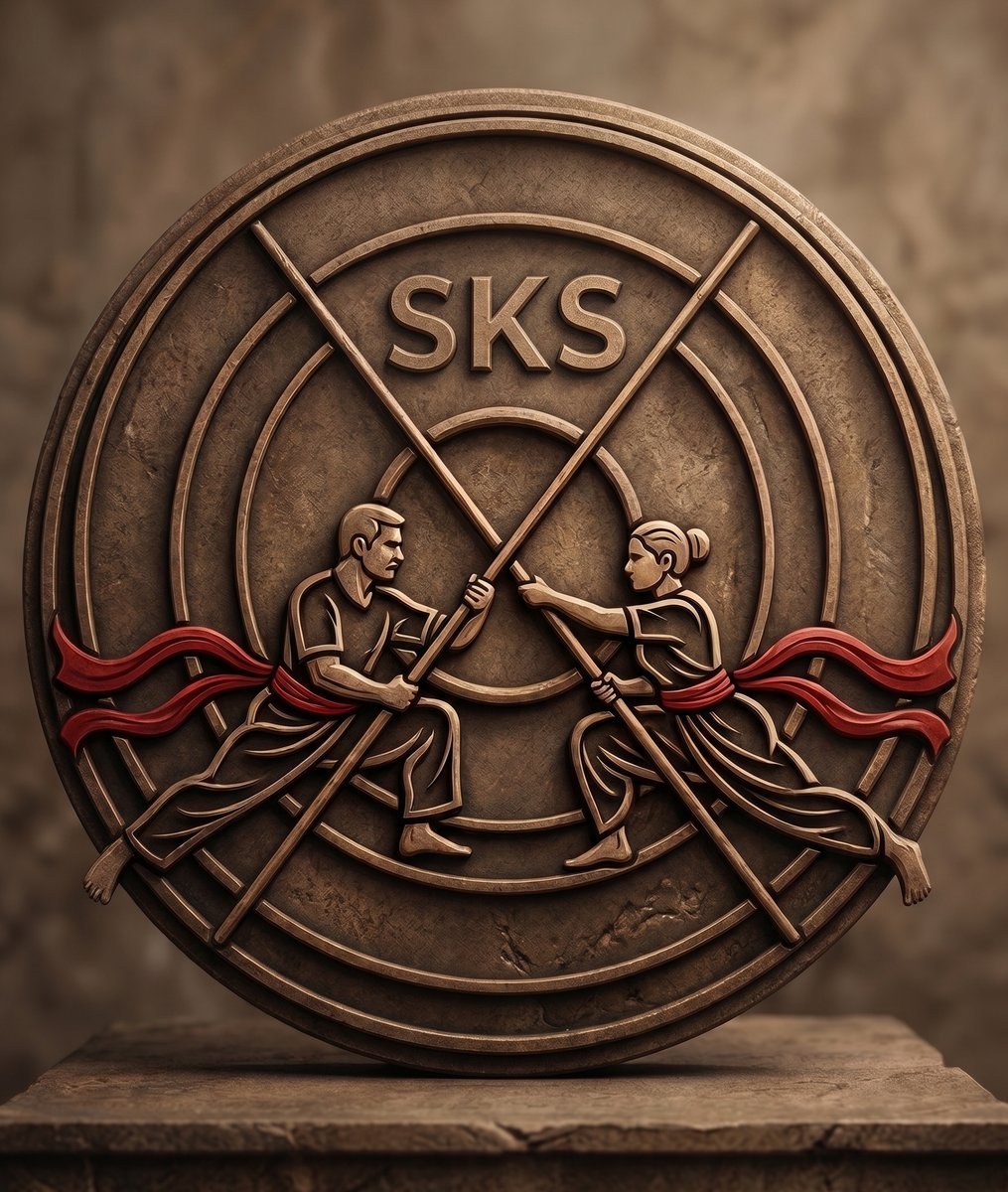
In the tradition of the staff
Our training draws from all three regional traditions of Kerala Kalaripayattu - Vadakkan, Thekkan, and Madya Kerala - taught in four progressive stages.
The foundation. Body-conditioning postures (vadivu) named after animals - horse, lion, elephant, serpent - along with kicks, jumps, twists, and fluid sequences. Every student begins here.
Wooden weapons - the long staff (kettukari), the short stick (cheruvadi), and the curved otta. Strikes, guards, and pre-set sequences develop distance, timing, and control.
Metal weapons - sword and shield (val-paricha), spear (kuntham), dagger (katara), and the flexible urumi. Taught only after the student has earned it.
The empty-hand stage. Locks, throws, strikes, and knowledge of the body's vital points (marma). The highest and most carefully guarded part of the curriculum.
Kalaripayattu has long been practised in three regional traditions across Kerala - each with its own lineage and character. At SKS, our training draws from all three, rather than from any one alone.
The northern Kerala tradition - the classical foundation of our curriculum, structured through the four progressive stages above.
The southern Kerala tradition. Techniques and elements from this stream are woven into the training alongside the northern.
The central Kerala tradition. From the Madya Kerala lineage we preserve Kalam Chavit Mura - the distinctive foot-pattern practice of this stream.
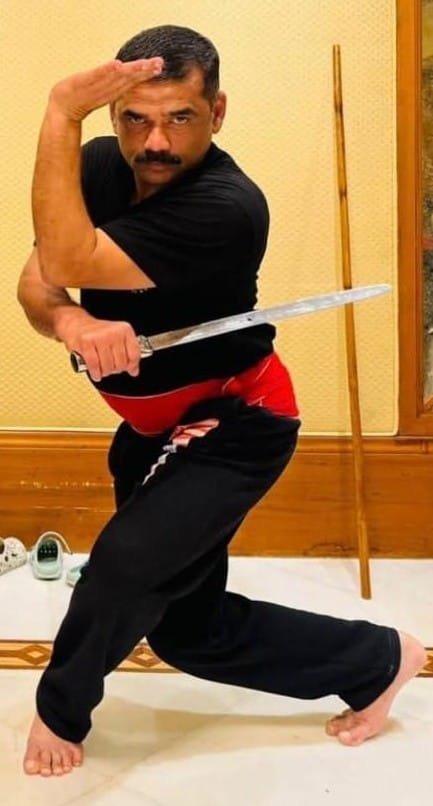
The weapon is never given. It is earned - stage by stage, under the Gurukkal’s eye. TP Dakwan Gurukkal · Ankathari
Students of every age group are welcome. Each batch is designed around the physical needs and learning capacity of that stage of life.
Foundational movements - stance, breath, and discipline. Before they learn to strike, they learn to stand still. Before they learn to counter, they learn to listen.
Meythari body conditioning, weapon basics, and combat sequences. This is the stage where physical capacity and focus are built together.
Structured batches that rebuild posture, restore flexibility, and develop the calm strength that modern desk-bound life erodes. No prior experience required.
Adapted training that preserves mobility, breath, and balance - qualities most people lose after fifty unless they are consciously trained.
Beginners and experienced practitioners train in separate batches. Progression is guided, never rushed.
We offer separate batches for ladies and girls, taught by a qualified lady trainer. The curriculum is identical in depth and rigor to the men's batches - no dilution, no compromise.
What changes is the space: a comfortable environment where our female students can train fully and freely, whether they are seven or forty-seven.
Historically, women have been part of Kalari for centuries - the 16th-century warrior Unniyarcha is one of Kerala's most celebrated Kalari practitioners. We continue that tradition.
Kalari is more than self-defence - a complete system for body, breath, and mind. Students notice the change within weeks.
Kalari builds both at once - something few disciplines achieve. Whole-body strength without equipment, and the range of motion most adults lose by their thirties.
Grounded stances and controlled movement correct the postural issues caused by sedentary work, prolonged screen time, and poor habits.
Every movement is synchronized with breath - building lung capacity, endurance, and a calm that does not break under pressure.
Holding a stance, executing a sequence precisely, repeating until it is right. Students report clearer thinking, better sleep, and reduced anxiety.
A practical outcome, not the central purpose. Students develop the awareness and reflexes to protect themselves - a real skill, especially for women and children moving through public spaces.
Advanced training introduces marma - the vital points of the human body - giving practitioners a unique understanding of their own physiology.
Traditional uzhichil (therapeutic oil massage) is part of the kalari ecosystem. Minor injuries and stiffness are often addressed within the tradition itself.
Kalari does not end at the individual. It builds something in the community it serves - across every generation.
Discipline and respect, learned early. They learn to manage their energy, follow instruction, and work toward a shared goal - traits that carry into school, family, and adult careers.
A constructive channel for physical energy. Rather than seeking proof of strength in unhealthy ways, they find it in measured, disciplined practice.
A relationship with the body that modern life rarely allows. Many come to us after years of neglect and leave with a practice they carry for decades.
Confidence in their physical presence - the settled strength to move through public spaces and unfamiliar situations. A value no app or online course can deliver.
Every student becomes part of an unbroken lineage of Kerala Gurukkal. Kalari survived colonial bans and modernization because people chose to preserve it - each new student continues that.
Short clips from inside the kalari - weapon sequences, stages of training, and moments from the Gurukkals' own practice.
Sessions run regularly through the week, with batches organized by age, gender where appropriate, and experience level. New students begin with a trial session - the Gurukkal assesses the appropriate batch and starting level.
We welcome visitors to observe a session before enrolling - the best way to understand what Kalari is. Parents are encouraged to bring children for an introductory visit. Ladies and girls are welcome to meet our lady trainer.
Practice takes place on the earthen floor of the kalari - a consecrated space entered with respect, shoes left at the threshold.
Progress is not rushed. A student moves to the next stage only when the Gurukkal judges the current one truly learned. Uniform and training equipment are discussed at enrollment.